Block Builder Deep Dive: Ethereum BuilderNet (I)
Table of Contents
Background
Today, roughly 80% of Ethereum blocks are built by two builders: Titan and BuilderNet. That concentration creates three immediate issues:
- Censorship risk: a single builder policy can directly decide whether a transaction gets included
- Orderflow monopoly: major wallets and aggregators often sign exclusive deals, leaving smaller participants with weaker access
- Opaque MEV distribution: value created by users is often captured by builders and a small set of partners
Two important milestones for BuilderNet:
- 2024-11-26: Flashbots launched BuilderNet with Beaverbuild and Nethermind
- 2025-05-06: Beaverbuild retired its centralized builder and fully migrated to BuilderNet
| Builder | Blocks | Market Share | Avg Tx/Block | Median Block Value |
|---|---|---|---|---|
| Titan Builder | 98,464 | 49.53% | 231 | 0.0085 |
| BuilderNet | 56,449 | 28.39% | 242 | 0.0086 |
| Quasar (quasar.win) | 34,335 | 17.27% | 216 | 0.0071 |
| Builder+ (www.btcs.com/builder) | 3,212 | 1.62% | 181 | 0.0282 |
| Beaverbuild | 1,835 | 0.92% | 247 | 0.0130 |
| Eureka (eurekabuilder.xyz) | 1,511 | 0.76% | 126 | 0.0053 |
| shimmerblocks.com | 1,455 | 0.73% | 100 | 0.0066 |
| bobTheBuilder.xyz | 904 | 0.45% | 54 | 0.0130 |
Core Idea
BuilderNet's goal is simple: multiple operators run the same open-source builder, share orderflow, and reduce single-operator dominance.
The design rests on three pillars:
- TEE: based on Intel TDX, so operators cannot inspect plaintext orderflow or arbitrarily modify execution logic
- Shared orderflow: transactions and bundles are broadcast over P2P instead of being kept as exclusive inventory
- Public refund rules: MEV refunds are distributed by marginal contribution
System Architecture
Main roles:
- Builder Node
- Node Operator
- Flashbots Infrastructure
- MEV-Boost Relay
- Orderflow Source
Orderflow Source includes wallets, applications, searchers, and end users.
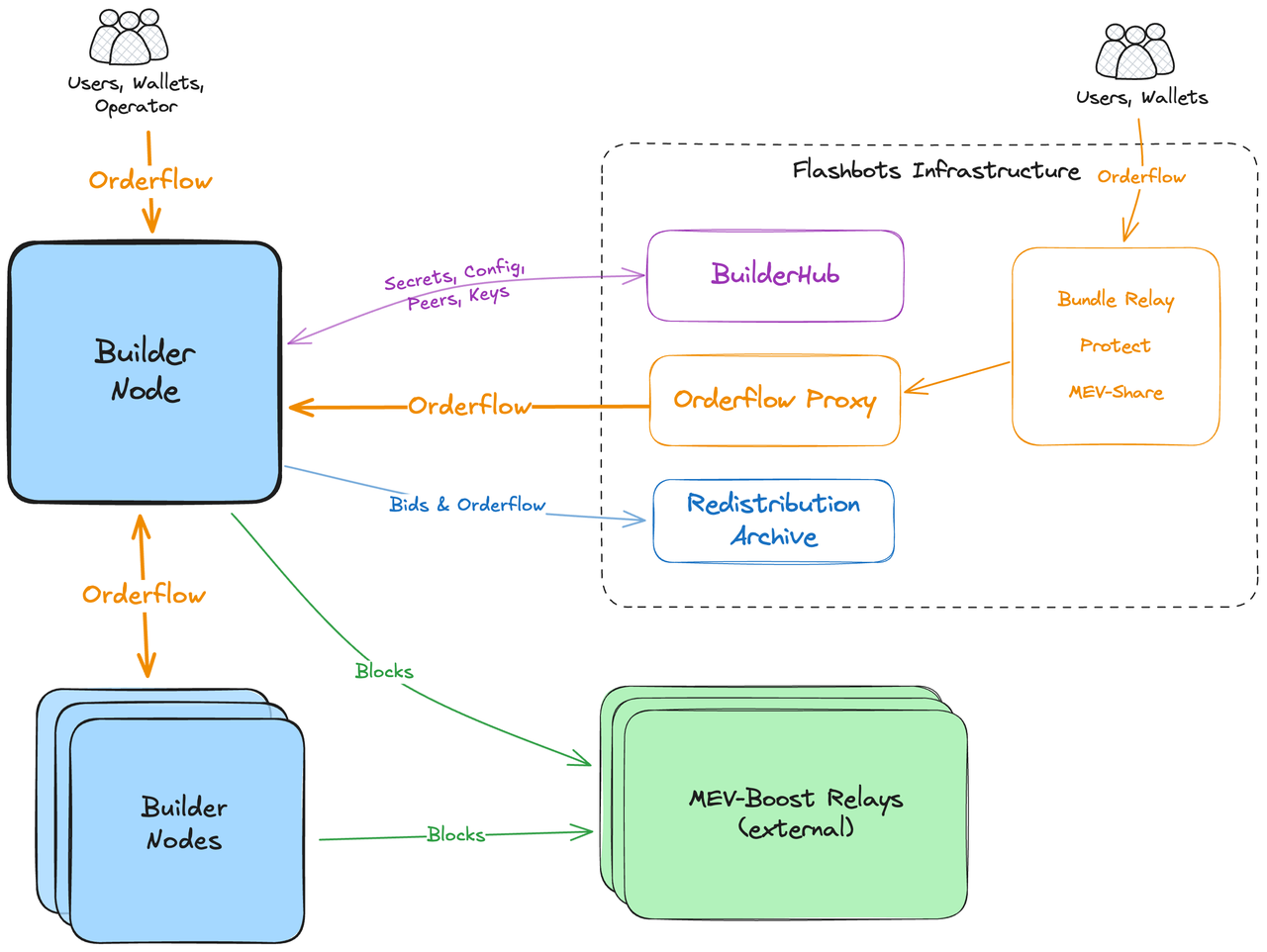
Figure 1: BuilderNet high-level architecture
Flashbots Infrastructure
There are still two centralized components:
- BuilderHub:
- Handles node identity, key distribution, and peer discovery
- Nodes boot with TEE attestation and request configuration from BuilderHub
- BuilderHub verifies measurement + IP allowlist, then issues sensitive material such as coinbase keys and relay signing keys
- Redistribution Archive:
- Stores orderflow, bids, and block results
- Used for refund calculation and auditing
- At a 50% win rate, storage is roughly 30GB/day
Node Boot Sequence
BuilderNet nodes are not Docker containers.
They run as full Linux TDX VM images built with Yocto (in .vhd format), on TDX-capable infrastructure such as Azure TDX Confidential VM or Intel 4th Gen Xeon Scalable+ hardware.
Flow:
- Start system services (network, filesystem, cron)
- Start time sync via NTP daemon (improved after v1.2)
- Start cvm-reverse-proxy for TEE attestation
- Pull secrets and config from BuilderHub
- Mount encrypted disk
- Start Operator API (system-api on port 3535)
- Start observability services (Prometheus/Fluentbit)
- Start Lighthouse (consensus client)
- Run Reth snapshot sync
- Start Reth (execution client)
- Start rbuilder, bidding service, and HAProxy
- Start orderflow-proxy and begin receiving orderflow
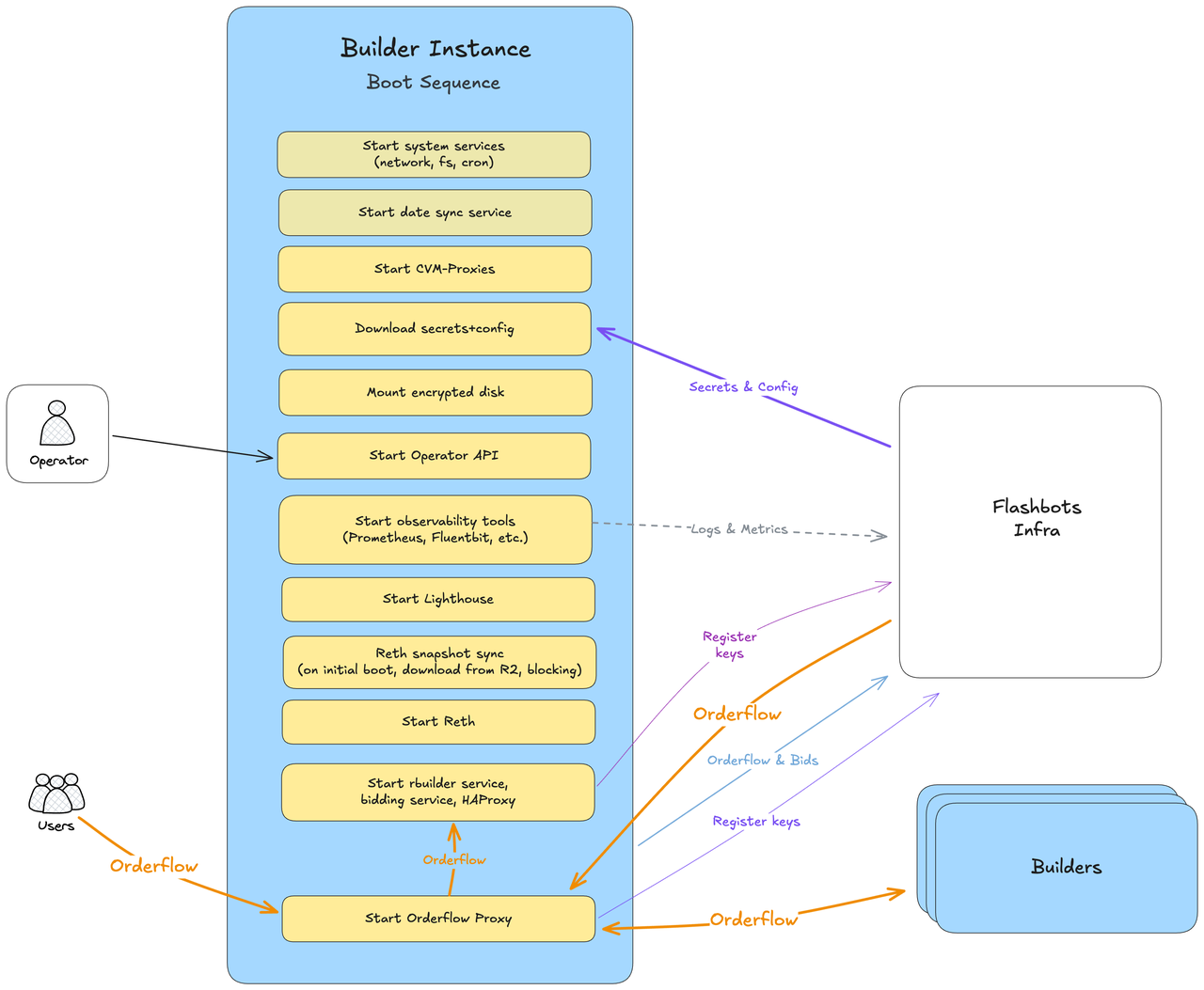
Figure 2: Builder node boot sequence
How to Become an Operator
The network is currently permissioned.
Flow:
- Submit application
- Flashbots review
- Allowlist approval
- Bring node online
Roadmap direction is permissionless, but that transition is not complete yet.
Orderflow Distribution
The key component is orderflow-proxy, running in two places:
- Flashbots infrastructure side (aggregation)
- Inside each TEE node (receive, broadcast, archive, forward)
Sources
- Flashbots Bundle Relay: searcher bundles
- Flashbots Protect: private user transactions
- MEV-Share: partially revealed transactions with hints
- Direct Submit: users, wallets, and searchers connect to any BuilderNet node
Responsibilities of orderflow-proxy
- Receive orderflow from Flashbots infrastructure
- Receive P2P-forwarded orderflow from other nodes
- Receive direct submissions to the local node
- Broadcast local orderflow to peers for a converged pool view
- Send a copy to Redistribution Archive for refund accounting
- Forward to local
rbuilder
End-to-End Encryption
orderflow-proxy generates TLS certificates and ECDSA keys inside TEE and registers them with BuilderHub.
Node-to-node links are TLS encrypted, and peer certificates are matched against BuilderHub-registered public keys.
Users can also use aTLS to verify node identity before sending orderflow.
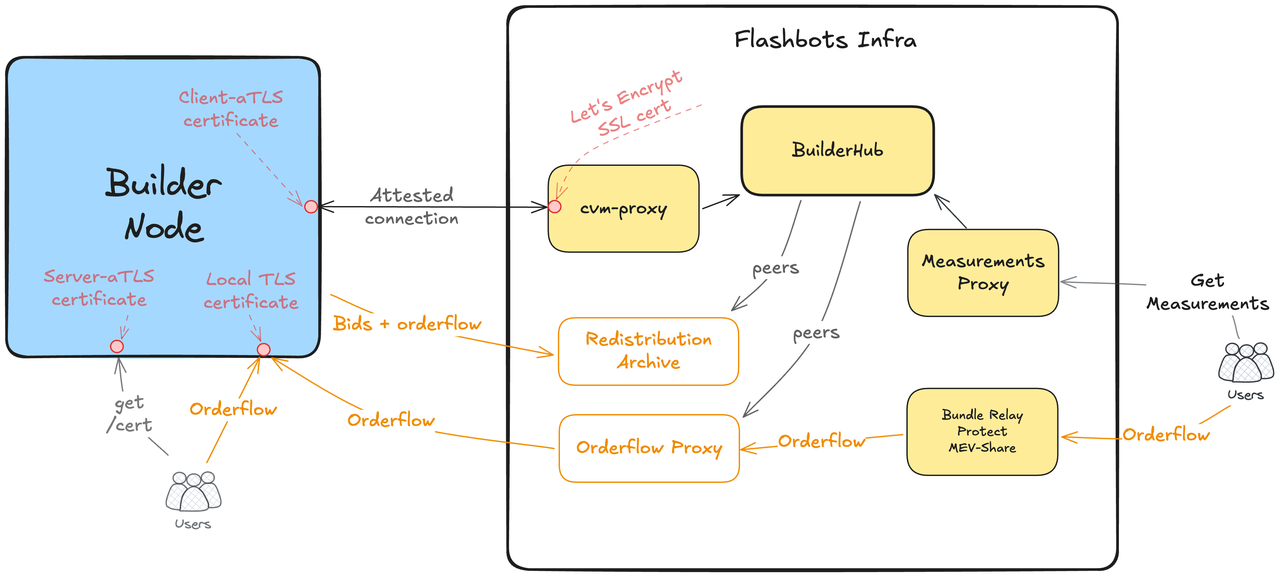
Figure 3: Trusted connectivity between node and infrastructure
Block Building Pipeline
The core engine is rbuilder (Rust, built on Reth).
Inputs
- Transactions and bundles forwarded by
orderflow-proxy MEV-Sharehints- Local Reth mempool
Processing Steps
- Simulation and validity checks (including gas constraints)
- Bundle merge + ordering for value maximization
- MEV extraction (backrun, arbitrage, etc.)
- Compliance filtering based on operator blocklist
- Gas optimization by transaction ordering
Packaging and Submission
Packaging phase:
- Apply
withdrawals - Run
post-blockcalls - Compute
state root hash - Package full block
Submission phase:
- Private
bidding servicecomputes bid price - Submit to multiple MEV-Boost relays
- Write
BuilderNet (operator_id)intoextra_datafor on-chain attribution
v1.3 highlights:
- Regional relay-only submission (about 50ms cross-region savings)
- Bundle cancellation support
- ~2x p99 end-to-end latency improvement
Refund Mechanism
Goals
- Give users, wallets, apps, and searchers a more transparent MEV path
- Reduce per-transaction net cost to land on chain
- Keep network operations sustainable
| Goal | Description |
|---|---|
| Transparency | Replace opaque off-chain orderflow deals |
| Permissionless | Anyone can receive refunds under public rules |
| Cost Minimization | Each transaction pays only the required competitive amount |
| Anti-Sybil | Identity constraints prevent refund gaming via split identities |
Refund Logic
- BuilderNet competes in MEV-Boost auctions
- If a winning block is bid below its true value, the gap becomes distributable remainder
- For landed transactions from
eth_sendBundle,mev_sendBundle, andeth_sendPrivateTransaction, BuilderNet estimates contribution by replay/simulation - Remainder is distributed proportionally to contribution
| Scenario | Eligible for Refund |
|---|---|
| Private submitted transaction/bundle | Yes |
| Public mempool transaction | No |
| Bundle containing only public mempool tx | No |
| Bundles from the same signer | Treated as non-competitive (merged) |
Note:
- This is different from the built-in refund field in
eth_sendBundle
eth_sendBundle refund fields:
refundPercent   // Integer: 1-99
refundRecipient // String: refund recipient address
Flat Tax Rule (Core Formula)
| Symbol | Meaning |
|---|---|
| T | Set of all bundles |
| B(T) | Most profitable block constructed from T |
| v(T) | Value of B(T) |
| b_i(T) | Total payment from identity i's bundles if B(T) is realized |
| c | Payment sent by builder to proposer to win the block |
Marginal Contribution
mu_i(T) = min(b_i(T), v(T) - v(T \ i))
Marginal contribution is capped by payment, so net payment cannot become negative.
Refund Formula
phi_i(T,c) = ( mu_i(T) / sum_j mu_j(T) ) * min( v(B(T)) - c, sum_j mu_j(T) )
Interpretation:
v(B(T)) - cis distributable remainder- If remainder covers total marginal contribution, each participant can recover full marginal contribution
- Otherwise it is allocated pro-rata
Net Payment
p_i(T) = b_i(B(T)) - phi_i(T,c)
Net payment = gross payment - refund.
Identity Constraint (Anti-Sybil)
To prevent split-identity bundle strategies from extracting extra refunds, BuilderNet adds a joint marginal contribution constraint.
Joint Marginal Contribution
mu_I(T) = min( sum_{i in I} b_i(T), v(T) - v(T \ I) )
Optimization Problem
Actual refunds psi(T,c) are solved as:
min_{r in R_+^n} sum_i (r_i - phi_i(T,c))^2
s.t.  sum_{i in I} r_i <= mu_I(T),  for all I subseteq B(T)
      sum_i r_i <= v(T) - c
The objective is to stay close to Flat Tax outputs while satisfying joint and global constraints.
Numerical Example
Given:
- v(T) = 10 ETH
- c = 7 ETH
- mu_A = 1.5 ETH
- mu_B = 1 ETH
Computation:
- Remainder = v(T) - c = 3 ETH
- sum(mu_j) = 1.5 + 1 = 2.5 ETH
- Distributable = min(3, 2.5) = 2.5 ETH
- Refunds:
- phi_A = (1.5 / 2.5) * 2.5 = 1.5 ETH
- phi_B = (1 / 2.5) * 2.5 = 1 ETH
| Parameter | Value |
|---|---|
| Block value v(T) | 10 ETH |
| Proposer payment c | 7 ETH |
| A payment b_A | 2 ETH |
| A marginal mu_A | 1.5 ETH |
| B payment b_B | 1 ETH |
| B marginal mu_B | 1 ETH |
| Searcher | Gross Payment | Marginal Contribution | Refund | Net Payment |
|---|---|---|---|---|
| A | 2 ETH | 1.5 ETH | 1.5 ETH | 0.5 ETH |
| B | 1 ETH | 1 ETH | 1 ETH | 0 ETH |
If a participant's marginal contribution equals payment and remainder is sufficient, net payment can approach zero.
Payout and Impact
Tracking dashboards:
- BuilderNet Dashboard
- Flashbots Protect Dashboard
- BuilderNet APIs (subject to available endpoints)
Refund destination example:
| Item | Value |
|---|---|
| Refund Address | 0x62A29205f7Ff00F4233d9779c210150787638E7f |
| ENS | refunds.buildernet.eth |
Expected effects:
- Validators: limited short-term impact, possible long-term value shift toward orderflow providers
- Operators: future rules are expected to account for operating costs
API Interfaces
Orderflow API
Endpoints
Rate limit is around 3 requests/IP/second (subject to change).
| Region | Endpoint | Orderflow Port | TEE Port |
|---|---|---|---|
| Global | rpc.buildernet.org | 443 | 7936 |
| US | direct-us.buildernet.org | 443 | 7936 |
| EU | direct-eu.buildernet.org | 443 | 7936 |
Supported Methods
eth_sendBundle: supports signed headers, refund params, bundle cancellationeth_sendRawTransaction: no refund support, usually retried across multiple blocks
TEE Verification
Use attested-get:
go install github.com/flashbots/cvm-reverse-proxy/cmd/attested-get
attested-get \
  --addr=https://rpc.buildernet.org:7936/cert \
  --expected-measurements=https://measurements.buildernet.org \
  --out-response=builder-cert.pem
This validates TEE measurement during TLS handshake and exports a certificate bound to the VM image.
Operator API
Each node exposes system-api on port 3535, typically behind HTTP Basic Auth + TLS.
# Restart rbuilder
curl --insecure --user admin:secret \
  https://ip:3535/api/v1/actions/rbuilder_restart

# Upload blocklist
curl --insecure --user admin:secret \
  --data-binary "@blocklist.json" \
  https://ip:3535/api/v1/file-upload/rbuilder_blocklist
Since blocklists are per-operator, a transaction filtered by one operator can still be included by another.
Service Components
rbuilder: block construction enginebidding service: private bidding logicorderflow-proxy: ingest, P2P broadcast, archival forwardingsystem-api: operator control planeHAProxy: traffic routing and high availability- Prometheus/Fluentbit: metrics and logs
| Repository | Description |
|---|---|
| github.com/flashbots/rbuilder | Block building software |
| github.com/sigp/lighthouse | CL client |
| github.com/paradigmxyz/reth | EL client |
| github.com/flashbots/system-api | Interface between operators and services in TDX instance |
| github.com/flashbots/cvm-reverse-proxy | Verifies TDX measurements via aTLS |
| github.com/flashbots/buildernet-orderflow-proxy | Receives and multiplexes orderflow |
Titan Builder vs BuilderNet
High-Level Comparison
- Titan: more centralized path, usually lower latency
- BuilderNet: multi-operator shared orderflow with explicit refund mechanics
| Dimension | Titan | BuilderNet |
|---|---|---|
| Market Share | ~46-51% | ~27-39% |
| Architecture | Centralized, closed-source | Decentralized, open-source (TEE) |
| Orderflow | Exclusive flow (for example Banana Gun) | Shared across all nodes |
| Operators | Single team | Flashbots + Beaverbuild + Nethermind |
Why Titan Still Has Higher Share
- Exclusive orderflow relationships with major wallets/bots
- Latency advantage from centralized architecture
- Neutrality narrative (
no searching) that attracts some bundle flow
Public analyses often note a significant fee share from exclusive flow channels.
| Region/Item | Titan | BuilderNet |
|---|---|---|
| Global | rpc.titanbuilder.xyz | rpc.buildernet.org |
| US | us.rpc.titanbuilder.xyz | direct-us.buildernet.org |
| EU | eu.rpc.titanbuilder.xyz | direct-eu.buildernet.org |
| Asia | ap.rpc.titanbuilder.xyz | - |
| Rate Limit | 50/sec | 3/sec |
Bundle Tracing
Titan exposes a bundle status query (titan_getBundleStats), while BuilderNet currently lacks full parity.
curl -X POST -d '{"method":"titan_getBundleStats","params":[{"bundleHash":"0x..."}],"jsonrpc":"2.0","id":1}' \
  https://stats.titanbuilder.xyz
MEV-Boost and Relay
What is MEV-Boost
MEV-Boost is open-source middleware by Flashbots for PBS in Ethereum PoS. Validators can source higher-value blocks from a builder market instead of building entirely by themselves.
A common public metric is that most Ethereum blocks currently flow through MEV-Boost paths.
Roles
- Searcher: creates value-extracting bundles
- Builder: assembles candidate blocks and bids
- Relay: validates/escrows blocks and forwards highest bids
- Validator: blind-signs and broadcasts blocks
| Role | Description |
|---|---|
| Validator (Proposer) | Chooses highest bid block and signs it |
| Builder | Constructs orderflow-rich blocks and submits bids |
| Relay | Trusted intermediary that verifies blocks and aggregates bids |
| MEV-Boost | Validator-side sidecar that connects to multiple relays |
Simplified Workflow
- Validator registers with relay
- At slot time, validator requests highest bid block header (no full tx body)
- Validator blind-signs
- Relay validates signature and returns full block
- Validator broadcasts
Blind signing reduces validator ability to frontrun or replace block contents before commitment.
Relay Responsibilities
- Aggregate submissions from multiple builders
- Simulate and validate block correctness/payment constraints
- Hide full contents before signature
- Release and broadcast after signature
- Provide historical data APIs
| Component | Function |
|---|---|
| Proposer API | Validator registration, header fetch, signed block submit |
| Builder API | Accepts block submissions from builders |
| Data API | Queries historical block data |
Optimistic Relaying
Some relays use optimistic mode for lower latency:
- return block first, complete parts of validation asynchronously
- if invalid, builder bears the penalty
Market and Censorship
- Builders usually submit to multiple relays to maximize win rate
- Relay policy differs on sensitive flow (for example OFAC-related addresses)
- Validators can reduce single-relay censorship exposure via multi-relay configs and
min-bid
| Relay | Market Share | Operator | Censorship Policy |
|---|---|---|---|
| Ultrasound Money | ~30% | Community | Non-censoring |
| Titan Relay | ~23% | Titan Builder | Non-censoring |
| bloXroute Max Profit | ~18% | bloXroute | Non-censoring |
| bloXroute Regulated | ~14% | bloXroute | OFAC-compliant |
| Flashbots | ~6% | Flashbots | OFAC-compliant |
| Agnostic | ~5% | Independent | Non-censoring |
| Aestus | ~3% | Independent | Non-censoring |
| Type | Relays | Notes |
|---|---|---|
| Censoring | Flashbots, bloXroute Regulated | Follows OFAC |
| Non-censoring | Ultrasound, bloXroute Max Profit, Titan, Agnostic, Aestus | Neutral policy |
| Time | Landscape |
|---|---|
| 2022.9 (post-Merge) | Flashbots dominated at ~82% |
| 2023 | bloXroute and Ultrasound rose; Flashbots fell to ~25% |
| 2024 | Blocknative exited; top 4 controlled 95% |
| 2025 | Ultrasound + bloXroute + Titan led |
Relay Economics
Relays are critical PBS infrastructure but still lack durable direct monetization in many setups.
| Role | Revenue Source |
|---|---|
| Builder | Block building profit (MEV + priority fee spread) |
| Validator | Bid paid by builders |
| Searcher | MEV profit |
| Relay | No direct revenue |
| Proposal | Content | Status |
|---|---|---|
| PBS Guild | Community-funded pool to subsidize relay operations | Rejected |
| Fee Market | Each relay charges ~1%; validators choose relay connections | Rejected |
BuilderNet and Relays
Submission Flow
bidding servicecomputes bid- Block is signed with relay key
- Submission fan-outs to multiple MEV-Boost relays
extra_datamarksBuilderNet (operator_id)
| Aspect | Traditional Builder | BuilderNet |
|---|---|---|
| Operations | Single entity | Multi-operator TEE nodes |
| Orderflow | Potentially exclusive deals | Network-wide sharing |
| Transparency | Black-box | Open-source rbuilder |
| MEV Distribution | Internalized/private deals | Public refund rules |
| Relay Submission | Direct relay submission | Through bidding service |
v1.3 Optimizations
- regional relay routing only
- bundle cancellation support
- about 2x p99 end-to-end latency improvement
Notes
- Latency remains the strongest share driver in high-frequency environments
- BuilderNet is more explicit on flow sharing + refunds, but still depends on some centralized coordination
- Private bidding logic is a practical tradeoff, but it reduces external auditability
- Per-operator blocklists improve censorship resilience at network level while increasing behavior diversity
Future: Enshrined PBS (ePBS)
Current MEV-Boost is out-of-protocol PBS and still relay-trust-heavy. The ePBS direction is to move PBS logic into the base protocol, but it remains an active research/iteration track.
| Aspect | Current (MEV-Boost) | Future (ePBS) |
|---|---|---|
| Relay Trust Model | Requires relay trust | Protocol-guaranteed |
| Implementation Mode | Optional sidecar | Protocol-enforced |
| Block Validation | Relay-side | Protocol-layer |
| Censorship Resistance | Depends on multi-relay setup | Inclusion List and related mechanisms |
Next Part
Block Builder Deep Dive: BSC PBS (II)